Quick Answer
Most electric razor foil-and-cutter assemblies are not designed for routine home sharpening. Clean the head, let it dry, lubricate it only if the manufacturer allows it, fully charge the shaver, and test it again. If the foil is damaged or the shaver still pulls hair after cleaning and a correct fit check, replacing the head is safer than using sandpaper, toothpaste, or improvised sharpening tools.
Last updated: August 6, 2026 | Author: William | Estimated reading time: 7 minutes
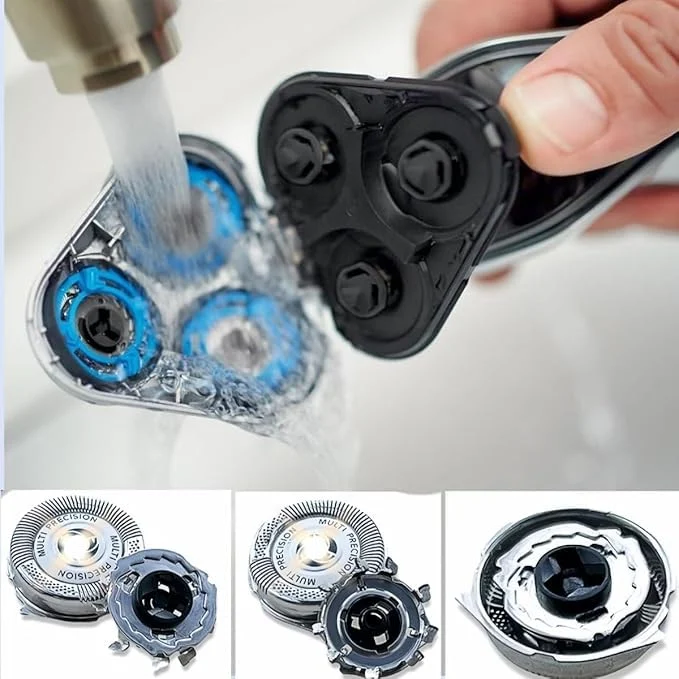
Can You Sharpen an Electric Razor?
Usually, you should not try to sharpen a removable electric razor head the way you would sharpen a kitchen blade. Foil shavers use a thin perforated screen over moving cutters, while rotary shavers use matched circular cutters. Their cutting surfaces need to stay aligned with very small clearances. Removing metal by hand can change that fit, create a rough edge, or damage the foil.
The safer order is to clean, dry, lubricate only according to the shaver’s instructions, charge, and test. Those steps can remove residue or rule out a weak motor as the reason a shave feels dull. They cannot repair a nicked foil or restore a worn cutter. When wear or damage remains, replace the removable head instead of forcing a sharpening experiment.
Identify the Cutting System Before You Touch It
Foil Shaver
A foil shaver has one or more thin metal screens covering reciprocating cutters. The replacement part is commonly a foil-and-cutter cassette or complete head. Do not press on the screen or try to flatten a dent with a tool.
Rotary Shaver
A rotary shaver has separate circular heads, each with a guard and internal cutter. A rotary head can look intact while its cutters are worn, so poor performance after proper cleaning is a stronger replacement signal than appearance alone.
Trimmer or Clipper
Trimmer blades have exposed teeth and follow different maintenance instructions. A detachable trimmer blade is not interchangeable with a foil or rotary shaver head. Use the manual for the exact trimmer before applying oil, removing blades, or considering professional sharpening.
Restore Performance Before Considering Sharpening
Follow this basic check before deciding that the blades need work:
- Turn the shaver off and disconnect it from power. Place it on a clear, dry surface.
- Remove the head as the manual describes. Do not pry at a cassette or housing with a knife or screwdriver.
- Clear trapped hair and residue. Use the supplied brush or the washing method approved for that model. Avoid pushing a sharp object into the foil, cutter mount, or drive.
- Let washable parts dry completely. Moisture left around the cutting assembly can affect the next test and can damage a device that is not rated for wet cleaning.
- Lubricate only when the manufacturer permits it. Use the specified shaver oil and amount; do not substitute household oil or grease.
- Fully charge the shaver. A weak battery or slow motor can make a good head feel blunt.
- Run a short test away from skin. Listen for scraping, rattling, or a change in normal movement before shaving.
If the shaver performs normally after this check, the problem was more likely residue, moisture, or low power than a blade that needed sharpening.
Do Toothpaste, Sandpaper, or a Sharpening Tool Work?
Toothpaste, fine sandpaper, abrasive paste, and small honing tools appear in some community repair discussions. They are not a universal, manufacturer-approved method for electric razor foil-and-cutter assemblies. The result depends on the head design, material, alignment, and the amount of metal removed, so a method that seems to help one old head can ruin another.
The main risks are a thinned or perforated foil, changed cutter geometry, sharp edges against the skin, abrasive residue inside the motor, and a head that no longer seats correctly. A damaged or altered head can also make it harder to tell whether the shaver body has a battery, drive, or mounting problem.
Do not use an abrasive method on a foil with a hole, crack, lifted edge, or deep dent. Stop using visibly damaged foil and replace the head. If a detachable trimmer blade is specifically designed to be sharpened, follow that product’s manual or use a qualified sharpening service instead of applying a foil-shaver technique.
Clean, Keep, or Replace? Use This Decision Table
| What you notice | First action | Likely decision |
|---|---|---|
| Hair or residue packed into the head | Clean and dry it using the model instructions | Keep testing |
| Weak motor or low battery | Fully charge and retest | Inspect the shaver body if it remains slow |
| Pulling continues after cleaning and charging | Inspect the foil, cutters, and head seating | Consider replacing the head |
| Hole, crack, sharp edge, or deep dent | Stop using the head | Replace it immediately |
| Shave takes substantially more passes than before | Clean, charge, and compare one normal shave | Replace if the problem continues |
| New head sits crooked or will not click on | Verify the model and head code | Do not force it |
| Correctly fitted new head still performs poorly | Check battery, drive, and mount | The shaver body may be the problem |
Age is a reason to inspect a head, not proof that sharpening is required. Performance, foil condition, and secure seating should decide what happens next.
When Replacement Is Better Than Sharpening
Replace the removable head when the foil is damaged, the cutters remain rough after cleaning, or the shaver repeatedly pulls hair and needs far more passes. Replacement is also the safer choice when the head has been bent, dropped, corroded, or altered with an abrasive.
Before ordering, record the brand, exact shaver model or type number, and code printed on the old head. Compare the connector, latch points, and overall shape with the replacement listing. A familiar brand name or series label is not enough to prove that two heads fit.
For Braun users, the manufacturer’s replacement-parts guidance can help identify the relevant family. Once the part family is confirmed, use the Braun replacement heads category to compare the available compatible options. Do not assume a Braun, Philips, Panasonic, or other brand head fits a model unless the product information identifies that model or head family.
Test a Replacement Head Safely
After fitting a replacement head:
- Check that it sits flat and locks securely.
- Run the shaver briefly away from your skin.
- Stop if it rattles, scrapes, lifts on one side, or needs unusual force to attach.
- Start with light, normal pressure rather than pressing harder to compensate for a fit problem.
- Keep the old head or a photo of its code until the new one has passed a normal shave.
A replacement cassette cannot repair a failing battery, motor, drive, or head mount. If a correctly identified and correctly seated new head behaves the same as the old one, inspect the shaver body before buying another cassette.
FAQ
Can I sharpen a foil electric shaver with sandpaper?
It is not a reliable or safe general method. Sandpaper can thin or perforate the foil, change the cutter clearance, and leave abrasive residue. Clean and test the head first, then replace it if wear or damage remains.
Does toothpaste sharpen electric razor blades?
Toothpaste is an abrasive cleaning compound, not a model-specific sharpening procedure. It can leave residue and cannot repair a damaged foil. Follow the manufacturer’s cleaning instructions instead.
Can oil make dull electric razor blades sharp again?
Oil can reduce friction when the manufacturer permits lubrication, but it does not restore worn metal. Use only the specified shaver oil and amount, then evaluate the head after cleaning and charging.
How do I know whether the head or the motor is failing?
Clean the head, fully charge the shaver, inspect the foil, and confirm that the head sits correctly. Continued pulling with visible foil wear points toward replacement; slow operation, weak drive, or the same problem with a verified new head points toward the shaver body.
Should I replace a dented foil if the shaver still runs?
Yes. A hole, crack, sharp edge, lifted edge, or deep dent is a reason to stop using the foil and replace the head rather than trying to flatten or sharpen it.
What information do I need before ordering a replacement head?
Record the brand, exact shaver model or type number, old-head code, and the shape of the connector or latch. Use the manufacturer’s instructions or parts lookup for that model, and do not force a head that does not sit level and secure.